
H&E Staining Protocol: 5 Best Practices for Crisp, Consistent Slides
Hematoxylin and eosin (H&E) is the workhorse stain of histology, and it’s often the first place problems show up when a workflow starts to drift. Nuclear detail softens. Eosin loses clarity. Background becomes inconsistent. Two sections from the same block suddenly don’t look like they belong together.
When you’re working with an H&E staining protocol, consistency isn’t a nice-to-have; it’s essential. Accurate interpretation depends on reliable color balance, contrast, and morphology, slide after slide.
This guide breaks down five best practices that help labs maintain control over the hematoxylin and eosin staining procedure, whether staining is done manually or on an automated platform. The focus isn’t on reinventing the process, but on tightening the steps that matter most and minimizing the variability that quietly erodes slide quality over time.
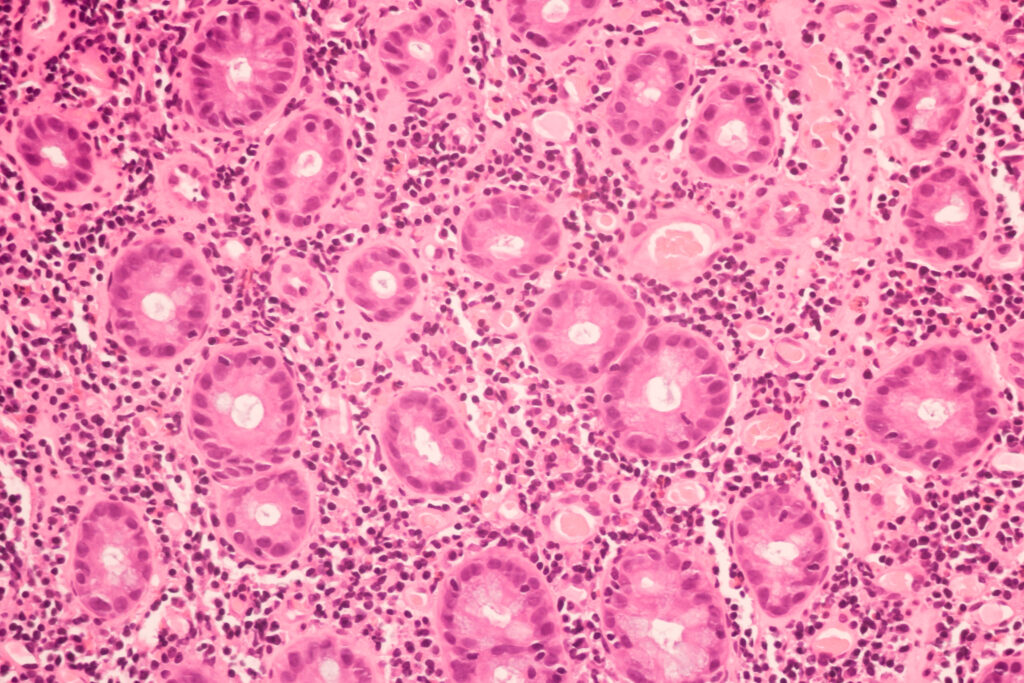
Understanding the H&E Staining Protocol in Practice
At its core, the hematoxylin and eosin staining protocol uses two dyes to create contrast within tissue sections:
- Hematoxylin highlights nuclei, allowing pathologists to evaluate chromatin patterns, mitotic activity, and nuclear morphology.
- Eosin counterstains cytoplasm and extracellular components, providing context, structure, and balance.
This balance is what makes the H&E protocol so powerful. It reveals both the fine detail and the broader tissue organization in a single slide.
While individual labs may tweak timing, reagent brands, or equipment, the hematoxylin eosin protocol follows a familiar sequence:
- Tissue fixation and processing
- Sectioning and mounting
- Deparaffinization and rehydration
- Hematoxylin staining
- Differentiation and bluing
- Eosin counterstaining
- Dehydration, clearing, and coverslipping
Every H and E staining procedure depends on these steps working together. Skipping corners or allowing variability to creep in at any point will show up on the slide.
Best Practice #1: Start With Consistent Tissue Preparation
No staining technique can compensate for poorly prepared tissue. Before focusing on the dyes themselves, consistency must begin at fixation, processing, and sectioning.
Variations in fixation time, tissue thickness, or embedding orientation directly affect how tissue absorbs stain. Over-fixed tissue can resist penetration. Under-fixed tissue may stain unevenly or distort morphology.
Experienced labs control this by standardizing:
- Fixation duration
- Paraffin processing cycles
- Section thickness across all cases
This is especially important when working with both normal tissue and malignant tissue, where cellular density and structure can vary significantly. When tissue inputs are consistent, the procedure of hematoxylin and eosin staining becomes far more predictable.
Access to reliable, well-characterized samples also plays a role. Labs that work with consistent tissue sources, including curated collections of malignant and normal tissue, eliminate unnecessary variability before staining even begins. That foundation makes every downstream step more reliable.
Best Practice #2: Treat Reagents as Living Components, Not Static Supplies
One of the most common mistakes in routine histology is treating stains like static chemicals rather than dynamic tools.
Hematoxylin and eosin solutions change over time. Oxidation, evaporation, and contamination all affect staining behavior. A solution that worked perfectly last month may quietly drift out of optimal range without obvious visual cues.
Strong labs manage this by:
- Rotating reagents on a defined schedule
- Filtering or replacing hematoxylin regularly
- Monitoring pH and clarity
- Logging reagent changes and performance
This attention to detail prevents subtle issues, such as muddy nuclei, excessive background staining, or inconsistent eosin intensity — all common complaints when the hematoxylin-eosin staining procedure drifts out of control.
Consistency is especially critical in high-volume environments where slides move quickly, and minor variations accumulate across batches.
Best Practice #3: Adjust Timing Based on Tissue, Not Habit
One of the hardest lessons for new technicians to learn is that timing is not one-size-fits-all.
Different tissues respond differently to the h and e protocol. Dense fibrous tissue, fatty tissue, inflamed samples, and highly cellular tumors all interact with dyes in unique ways. Rigidly applying the exact timing across all slides can lead to over- or under-staining.
Experienced teams train their staff to recognize:
- When hematoxylin needs slightly more prolonged exposure
- When differentiation should be shortened
- When eosin needs to be pulled earlier to avoid masking nuclear detail
This is where experience matters most. Understanding how tissue composition influences stain uptake allows labs to refine the hematoxylin and eosin staining procedure without rewriting the protocol itself.
Best Practice #4: Build Quality Control Into the Daily Workflow
Quality control should not be limited to occasional audits. It should be part of daily operations.
Reliable labs routinely review:
- Nuclear sharpness
- Cytoplasmic contrast
- Background clarity
- Uniformity across batches
Control slides provide a baseline for comparison, allowing teams to catch drift early. When slides start to look “slightly off,” that’s the signal to investigate reagents, timing, or processing — not to push through and hope for the best.
This approach reduces recuts, minimizes pathologist frustration, and preserves confidence in the H&E staining procedure across cases.
Best Practice #5: Think Beyond the Slide, Workflow Matters
The H&E staining protocol doesn’t exist in isolation. It’s part of a larger pathology workflow that includes scanning, interpretation, storage, and sometimes digital analysis.
As labs increasingly integrate digital pathology systems, consistency in staining becomes even more critical. Variations that might be acceptable under a microscope become exaggerated when slides are scanned, shared, and analyzed digitally.
Understanding how stained slides interact with broader digital pathology workflows, including slide imaging and archiving, helps labs future-proof their processes. This is where aligning traditional hematoxylin eosin protocol practices with modern pathology infrastructure pays off.
Common H&E Staining Challenges (and How to Avoid Them)
Even well-run labs encounter recurring issues. Recognizing them early prevents larger disruptions.
Uneven staining often results from incomplete deparaffinization or inconsistent rehydration.
Weak nuclei usually indicate exhausted hematoxylin or excessive differentiation.
Overly pink slides suggest prolonged eosin exposure or inadequate rinsing.
Background haze often results from contaminated reagents or poor dehydration.
Most problems aren’t failures of the H and E staining protocol itself; they’re execution issues. Addressing root causes quickly keeps workflows efficient and predictable.
Supporting Consistent Results With Reliable Tissue Sources
High-quality staining depends on high-quality inputs. Labs conducting diagnostic, validation, or research work benefit from access to consistent tissue sources that support repeatable outcomes.
Working with well-characterized malignant tissue and normal tissue supports:
- Standardized staining results
- Cleaner slide interpretation
- Reliable training and validation workflows
Consistency in staining begins before the first reagent is applied to the slide. Tissue quality, fixation, and handling all influence how well hematoxylin and eosin bind during the staining process. Labs working with well-characterized research and diagnostic samples tend to see more reliable nuclear definition and cytoplasmic contrast across batches, especially when sourcing from standardized tissue products.
4 Frequently Asked Questions
1- What is the difference between an H&E protocol and an H&E staining protocol?
In practice, people use both interchangeably. “Protocol” can mean the whole workflow, while “staining protocol” emphasizes the stain steps (dewax → hematoxylin → bluing → eosin → finish). Either way, controlling the entire chain produces consistent results.
2- Is “hematoxylin and eosin staining protocol” the same as “H and E staining protocol”?
Yes. They refer to the same routine. SOPs often shorten terminology to H and E protocol or H&E protocol, but they describe the same sequence.
3- What causes inconsistent staining between slides?
Common causes include section thickness variation, exhausted dewaxing solvents, water-contaminated alcohols, hematoxylin exhaustion, over- or under-differentiation, inconsistent bluing, and eosin pH drift.
4- What is the procedure of hematoxylin and eosin staining in one sentence?
Remove wax, rehydrate with water, stain nuclei with hematoxylin, differentiate and counterstain with eosin for crisp nuclear detail, then dehydrate, clear, and coverslip for permanent preservation.
Final Thoughts: Precision Is Built, Not Assumed
A strong H&E staining protocol isn’t defined by the steps written in a manual. It’s characterized by how consistently those steps are executed, monitored, and refined over time.
By standardizing preparation, managing reagents carefully, adjusting timing intelligently, embedding quality control, and aligning staining with modern workflows, labs create slides that pathologists trust, every time.
If your work depends on reliable tissue specimens and repeatable histology results, access to consistent, high-quality samples can make all the difference. Exploring curated tissue collections and streamlined ordering processes helps support staining excellence from the very first step. Order tissue samples designed to support repeatable histology workflows today!