
Artificial Intelligence (AI) and Deep Machine Learning in Digital Pathology
In recent years, AI digital pathology has emerged as one of the most transformative forces in medical diagnostics, enabling faster, more accurate, and more efficient interpretation of tissue samples. By combining advances in digital pathology and artificial intelligence, researchers and clinicians are reimagining how pathology services are delivered. At the heart of this transformation lies deep learning in digital pathology, a powerful branch of machine learning that mimics the way the human brain processes visual information, yet offers unparalleled scalability and precision.
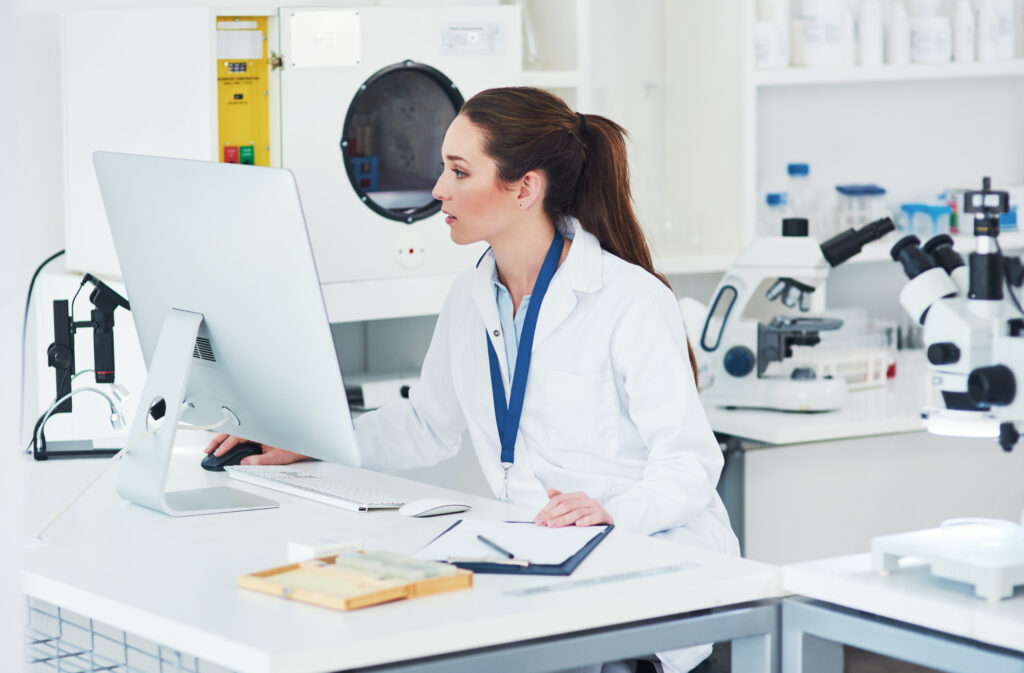
The Shift from Glass Slides to Digital Pathology
Traditional pathology has long relied on glass slides and light microscopes. While this method is effective, it comes with limitations in speed, scalability, and accessibility. Digital pathology AI changes this paradigm by converting tissue slides into high-resolution digital images. These images can then be analyzed by advanced algorithms, shared instantly with experts worldwide, and stored without degradation over time.
This shift not only improves workflow efficiency but also creates the foundation for AI computational pathology. Once slides are digitized, they can be fed into artificial intelligence systems trained to recognize patterns, anomalies, and disease markers that might be difficult for even experienced human eyes to detect consistently.
The Role of Artificial Intelligence in Digital Pathology
AI in digital pathology is not about replacing pathologists—it’s about augmenting their capabilities. Artificial intelligence algorithms can scan thousands of images far more quickly than humans, flagging areas of concern for future review. This speeds up diagnosis, reduces the risk of oversight, and allows pathologists to focus their expertise on the most challenging cases.
One of the most powerful applications is in artificial intelligence for digital and computational pathology, where AI systems are trained on massive datasets of annotated images. These systems learn to detect subtle variations in cell morphology, tissue structure, and staining patterns that correspond to specific diseases or prognostic indicators. Over time, the AI becomes capable of identifying not only well-known patterns but also novel ones that may lead to new discoveries in pathology research.
Deep Learning: The Engine Behind AI Digital Pathology
While “AI” is a broad term, the breakthrough performance in digital pathology deep learning comes from convolutional neural networks (CNNs) and other architectures designed for image recognition tasks. These systems are inspired by biological neural networks but are implemented in software and hardware optimized for computational speed.
In deep learning digital pathology, algorithms are trained using vast numbers of labeled pathology images. During training, the network learns to extract and combine features—from pixel-level color and texture patterns to complex tissue architecture—into a hierarchical understanding of the sample. Once trained, these models can classify new images with remarkable accuracy, often rivaling or surpassing human experts in certain well-defined diagnostic tasks.
Use Cases for AI and Deep Learning in Pathology
The applications of AI and digital pathology extend across virtually every aspect of pathology services. In cancer diagnosis, AI systems can detect malignant cells earlier and more consistently, helping to improve patient outcomes. For example, deep learning in digital pathology has shown exceptional performance in identifying breast cancer metastases in lymph nodes, detecting early-stage cancer, and grading gliomas.
AI can also quantify biomarkers with precision, an important step for both diagnosis and prognosis. These quantitative measures support the move toward personalized medicine, ensuring each patient’s treatment is based on objective, reproducible data.
In research, artificial intelligence and machine learning for digital pathology enable high-throughput analysis of archived tissue samples, making it possible to uncover subtle correlations between histological features and patient outcomes across massive datasets.
The Advantages of AI Computational Pathology
The advantages of AI computational pathology go beyond speed and accuracy. One of the most significant benefits is scalability. Once trained, an AI model can analyze thousands of slides per day without fatigue, ensuring consistent performance over time. This is particularly valuable for institutions facing shortages of experienced pathologists or surges in diagnostic demand.
AI also enhances reproducibility. Human interpretation of pathology slides can vary based on experience, fatigue, or even time of day. AI provides a second, standardized set of eyes on every case, reducing variability and increasing confidence in diagnostic decisions.
Furthermore, AI enables more comprehensive analysis. A human pathologist might focus on areas of the slide deemed most relevant based on experience, but AI can evaluate every pixel, ensuring that nothing is overlooked.
Overcoming Challenges in AI Digital Pathology
While the potential of digital pathology AI is immense, its adoption faces certain challenges. High-quality annotated datasets are essential for training robust AI models, but collecting and standardizing these datasets can be resource-intensive. Differences in staining protocols, imaging equipment, and slide preparation can introduce variability that AI systems must learn to handle.
Regulatory approval is another critical step. For AI-based diagnostic tools to be used clinically, they must undergo rigorous validation to ensure they are safe, effective, and generalizable across different populations and clinical settings.
Finally, there is the matter of integration. For AI to have maximum impact, it must fit seamlessly into existing pathology workflows, complementing rather than disrupting established practices. This requires thoughtful implementation, training, and collaboration between software developers, pathologists, and healthcare administrators.
The Future of Artificial Intelligence in Pathology
The future of artificial intelligence for digital and computational pathology is promising. As AI algorithms become more sophisticated and datasets more diverse, we can expect improvements in accuracy, speed, and the discovery of new disease biomarkers. Cloud-based platforms will make it easier for institutions of all sizes to access advanced AI tools without significant infrastructure investment.
Moreover, as deep learning in digital pathology continues to evolve, we may see AI not just identifying known disease states, but also uncovering entirely new pathological subtypes—insights that could drive the next wave of targeted therapies. Integration with genomic, proteomic, and other molecular data will further enhance the precision of diagnoses, creating a comprehensive, multi-modal approach to patient care.
Transforming Pathology with AI
The integration of AI in digital pathology and deep learning digital pathology is more than just a technological upgrade—it represents a fundamental shift in how we understand and diagnose disease. By combining the expertise of human pathologists with the analytical power of artificial intelligence, we can deliver faster, more accurate, and more personalized diagnoses, ultimately improving patient outcomes and advancing medical science.
Order Advanced Products from Superior BioDiagnostics
When your research depends on high-quality tissue samples, you need a partner you can trust. Superior BioDiagnostics is a U.S.-based biobank known for providing researchers with ethically sourced, meticulously preserved human tissue. Since 2016, leading universities, hospitals, and biotech companies have turned to Superior BioDiagnostics for FFPE samples—spanning malignant and normal tissue—that meet the highest scientific standards.
Every specimen is collected, backed by complete clinical data, and handled according to ISBER best practices to ensure accuracy, traceability, and consistency. Whether your work focuses on oncology, hematopathology, or diagnostic development, you can count on their team to deliver the right samples—quickly and reliably. If you’re ready to take your research further with specimens you can depend on, choose a biobank with a proven track record. Order from Superior BioDiagnostics today.